Boat Loan Finance Online Car Loan Repayment Calculator
Explore potential car finance repayments with our Car Loan Repayment Calculator. Test different loan amounts, interest rates and repayment periods, and view detailed amortisation charts to see how repayments, interest costs and loan balances may change over time.
Calculator results are estimates based on the inputs and assumptions used and are provided for general information only. They are not quotes, offers, approvals, eligibility decisions or personalised recommendations, and do not indicate that a lender will provide credit.
Car Loan Details:
Important!
Car Loan Interest Rates differ from lender to lender and will depend on your individual circumstances (credit history, employment status, age, etc.).
Car Loan Amortisation Calculator
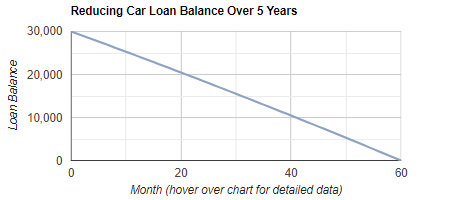
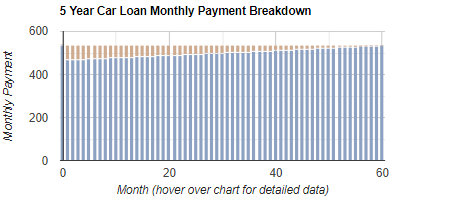
The following amortisation graphs detail month-by-month data on the progress of the proposed loan. The first chart below examines the reducing loan balance over the course of the finance contract term. The second graph illustrates the portion of each monthly repayment allocated to payment of interest vs principal reduction.
How to use our Car Loan Repayment Calculator
Our Car Loan Repayment Calculator helps you estimate repayments for an Australian car loan and see how your balance, interest and principal change over time. It is important because small changes to the loan amount, term or interest rate can materially affect your monthly budget and the total interest you pay. The amortisation charts make it easier to compare scenarios and choose a structure you can afford with confidence.
General information only: This calculator provides an estimate and does not take into account your objectives, financial situation or needs. Results are indicative and your actual interest rate and repayments will depend on the lender, your credit profile and the final loan contract (including fees and conditions).
How to complete each section for the best result:
1. Purchase Price
Enter the vehicle purchase price as a whole number (no decimals or commas). If you plan to borrow extra for on-road costs such as stamp duty, registration or insurance, include those amounts here so the estimate better reflects your likely loan size.
2. Deposit or Trade-in Value
Enter your cash deposit and/or trade-in value as a whole number. A higher deposit reduces the amount financed and usually lowers repayments and total interest.
3. Term of Loan (Years)
Select the number of years you want to repay the loan over. Shorter terms usually mean higher repayments but lower total interest. Longer terms can reduce monthly repayments but typically increase total interest paid.
4. Interest Rate (% per annum)
Select an interest rate to simulate. If you have a quote, choose the closest rate. If comparing options, run multiple calculations to see the impact of different rates.
5. Calculate
Click calculate to generate your results and charts.
How to interpret the results:
1. Repayment estimate: Use this as a starting point for affordability, leaving buffer for running costs and rate changes.
2. Amortisation charts: One chart shows the loan balance reducing over time; the other shows how early repayments are often interest-heavy and gradually shift toward principal repayment.
3. Comparison planning: Re-run the calculator with different terms, deposits and rates to identify a repayment level and total interest outcome that suits your budget.
When it comes to buying a boat, choosing between a new and a used one is a significant decision that can impact your finances in multiple ways. A boat is not just a pleasure craft; it's also a considerable investment that requires careful thought and planning. - read more
Dreaming of sailing into the sunset on your very own boat? Before you set sail, there's a crucial financial anchor to consider: your credit score. Understanding the link between your credit score and loan rates can make a significant difference in your boating dreams becoming reality. A good credit score not only plays a pivotal role in securing a boat loan, but it also influences the interest rates you're offered. - read more
Imperfect credit does not automatically mean you cannot apply for boat finance in Australia, but it can affect lender assessment, loan costs and the documents you may need to provide. This guide explains the factors lenders may consider and how to prepare before applying. - read more
Boat finance is more than choosing a loan amount and interest rate. This guide explains secured and unsecured boat loans, fixed and variable rates, comparison rates, common fees, deposits, balloon payments and repayment structures so Australian borrowers can compare options more confidently before applying. - read more
Fresh caravan park performance data for October 2026 suggests Australians are still willing to travel, even as household budgets remain under pressure. For people weighing up a caravan, camper trailer or motorhome purchase, the figures are a useful reminder that the finance decision should sit alongside the real cost of using the asset: park stays, fuel, insurance, servicing, storage and the extras that come with touring. - read more
ASIC’s 23 November 2026 update to Regulatory Guide 209, its responsible lending guidance, is narrowly focused on credit card lending to retirees, but it carries a useful reminder for Australians considering lifestyle finance such as jetski loans. The regulator has clarified how lenders may consider retirement income, assets and other circumstances without changing the underlying responsible lending obligations. - read more
ASIC’s Federal Court action against Commonwealth Bank over alleged CommBiz fee overcharging gives Australian SMEs a timely reminder that finance costs are not limited to headline interest rates. The regulator alleges tens of thousands of business customers, many of them small businesses, were charged fees that were not clearly disclosed for certain Direct Debit and Direct Credit transactions. - read more
Fresh Finder research has put a spotlight on a less dramatic but very real source of debt stress: ordinary household bills. Its 2026 Household Report, highlighted again on 17 November, found many Australians are not only cutting back on energy use, streaming and telco costs, but are also turning to credit, buy now pay later or no clear plan when larger bills arrive. - read more