
Boat Loan Finance Online :: News
SHARE

Share this news item!

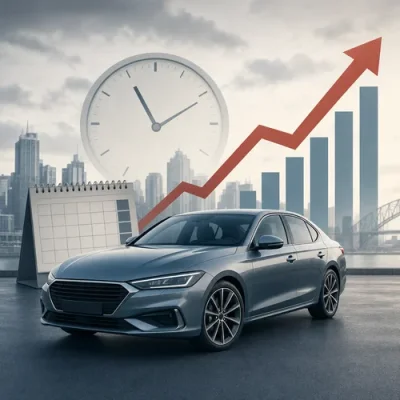
Another RBA Hike Tightens the Car Finance Equation

A 4.85% cash rate puts more weight on fees, terms and repayment buffers

Another RBA Hike Tightens the Car Finance Equation?w=400

The information on this website is general in nature and does not take into account your objectives, financial situation, or needs. Consider seeking personal advice from a licensed adviser before acting on any information.

Australian car buyers have a fresh reason to revisit their finance assumptions after the Reserve Bank of Australia lifted the cash rate target by 0.25 percentage points to 4.85% on 3 November 2026.
The move follows September’s increase and confirms that vehicle finance decisions are being made in a tougher interest-rate environment than many households and small businesses faced earlier in the year.

The RBA said inflation remains elevated and broadly based, with the updated outlook pointing to a longer path back towards target. The decision was not unanimous, with six board members voting to increase the cash rate and three preferring to leave it at 4.60%. That split matters because it signals both concern about inflation and uncertainty about how much additional tightening the economy can absorb.

For car loan shoppers, the cash rate is not the same as a car loan rate, and it does not mechanically reset every offer overnight. Lenders also consider funding costs, competition, vehicle age, loan security, borrower credit history, income stability, existing debts, fees and loan features. Still, a higher cash rate can feed into new advertised rates, variable-rate products and lender appetite over time, especially where lenders are reassessing risk or margins.

Recent comparison-market snapshots show why the detail matters. Canstar’s early November database snapshot, taken before the latest RBA decision had fully worked through the market, showed the lowest advertised secured car loan rates for a $50,000, five-year scenario starting in the high-5% to low-6% range. Those figures were useful reference points, but they were not guarantees of what every borrower would be offered, nor did they capture every fee, condition or future rate change.

In practical terms, borrowers comparing car finance may wish to focus on:

  • the comparison rate, establishment fees, monthly fees and early repayment conditions, not just the headline interest rate;
  • whether a longer loan term lowers the monthly repayment but increases the total loan cost;
  • the effect of adding on-road costs, insurance or accessories to the amount borrowed;
  • the repayment impact if a variable rate rises again, or if a fixed-rate offer is replaced with a higher rate before settlement;
  • keeping a buffer for fuel, insurance, servicing, registration and unexpected household costs.

This is also a moment to be careful with calculators. A Car Loan Repayment Calculator can help illustrate how different rates, deposits and terms may change repayments, but it remains an educational estimate based on assumptions. The latest RBA decision does not mean every car loan will immediately become more expensive, but it does raise the value of checking the full contract cost before treating any advertised rate as the whole story.

Published:Thursday, 5th Nov 2026
Author: Paige Estritori

Please Note: We do not endorse any specific products or companies. Some content is sourced from third parties, including press releases, and may not be independently verified for accuracy or completeness.

Share this news item:

Rate this article

0 Comments

No comments yet. Be the first to share your thoughts.

Finance News

Cattle Levy Rise Gives Producers a New Cost to Plan For
26 Nov 2026: Paige Estritori
Grass-fed cattle producers have narrowly backed an increase in the national cattle transaction levy, turning an industry governance debate into a practical budgeting issue for livestock businesses. The vote, reported after Meat & Livestock Australia’s annual meeting in Townsville, approved lifting the levy from $5 to $6 per grass-fed animal sold, with the higher rate expected to begin from 1 July 2028 if linked transparency and reporting reforms are in place. - read more
Autonomous machinery survey puts cost hurdles back in view
26 Nov 2026: Paige Estritori
A fresh national survey of Australian grain growers is putting autonomous machinery back on the finance agenda, not because every farm is ready to buy driverless equipment, but because the gap between interest and affordable adoption is becoming harder to ignore. - read more
Electric Trailers Turn Fuel Savings Into a Capital Planning Question
26 Nov 2026: Paige Estritori
ABC Landline reporting on 14 November 2026 has highlighted a South Australian push to commercialise battery-powered trailers that could reduce diesel use in heavy transport without requiring operators to replace prime movers. For Australian farm businesses, the development is worth watching because freight, haulage and on-farm logistics are increasingly part of the same machinery and cash-flow conversation as tractors, headers, loaders and irrigation assets. - read more
Mortgage hardship help can change the refinance picture
26 Nov 2026: Paige Estritori
Fresh reporting on mortgage stress has put a practical but often misunderstood issue back in front of Australian homeowners: asking a lender for hardship assistance can be the right step when repayments become unmanageable, but it may also change the way a future refinance is viewed. With higher variable rates flowing through household budgets after the Reserve Bank’s November move, the distinction between short-term repayment relief and longer-term borrowing flexibility is becoming more important. - read more


Bike Loans Articles

Understanding Boat Financing: Loan Types, Rates, Fees and Repayment Structures
Boat finance is more than choosing a loan amount and interest rate. This guide explains secured and unsecured boat loans, fixed and variable rates, comparison rates, common fees, deposits, balloon payments and repayment structures so Australian borrowers can compare options more confidently before applying. - read more
Boat Loan Eligibility with Imperfect Credit: What Applicants Should Understand
Imperfect credit does not automatically mean you cannot apply for boat finance in Australia, but it can affect lender assessment, loan costs and the documents you may need to provide. This guide explains the factors lenders may consider and how to prepare before applying. - read more
Don't Let These Boat Loan Application Errors Sink Your Dreams
Australia, with its stunning coastline and vast waterways, presents a perfect backdrop for boating enthusiasts. For many, owning a boat signifies freedom and adventure. Imagine setting sail with friends, fishing at sunrise, or exploring secluded coves that are only accessible by water. It's a lifestyle dream worth pursuing. - read more
How Boat Loan Repayments Are Calculated in Australia
Boat loan repayments are usually based on the amount borrowed, interest rate, loan term, repayment frequency, fees and any balloon payment. Understanding these inputs can help Australian boat buyers use repayment calculators more confidently and compare finance scenarios. - read more

Boat Loan Repayment Calculator

Boat Loan Repayment Calculator

The Great Aussie Boat Buyer's Handbook: A Guide to Loans, Repayments and Ownership Costs

The Great Aussie Boat Buyer's Handbook: A Guide to Loans, Repayments and Ownership Costs

Stay informed with MoneyTips

Get practical financial information, news, guides and resources.


Knowledgebase
Price-to-Earnings Ratio (P/E):
A valuation ratio of a company's current share price compared to its per-share earnings.