Hail Damage Turns Harvest Plans Into Cash-Flow Decisions
Storm losses underline the value of flexible machinery and working-capital planning
The information on this website is general in nature and does not take into account your objectives, financial situation, or needs. Consider seeking personal advice from a licensed adviser before acting on any information.
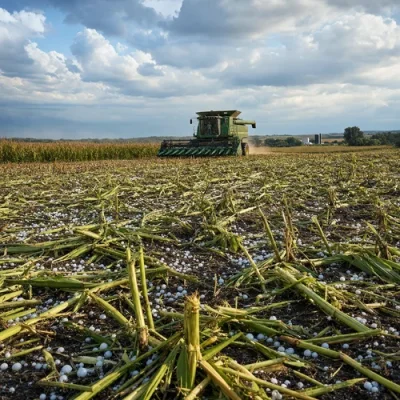
Recent ABC Rural reporting on a destructive hailstorm across Victoria’s Mallee has turned a promising harvest into a reminder that machinery decisions do not happen in calm, predictable conditions.
Crops near harvest across districts including Birchip, Wycheproof, Quambatook and Lascelles were damaged by severe hail, with wheat, barley, lentils, canola and other crops affected just as growers were preparing to move through paddocks.
For farm businesses, the financial pressure is not limited to the lost yield. In many cases, damaged paddocks still need to be harvested or cleaned up so ground can be prepared for the next season. That means headers, fronts, chaser bins, trucks, fuel, labour and repairs may still be required even when income from the paddock is sharply reduced. Wet gateways, flattened crops and grain on the ground can also slow operations and increase wear, downtime and handling costs.
The event highlights a difficult planning problem for machinery owners: a strong season can justify investment in capacity, but a late storm can change the revenue outlook before the first load is delivered. Where equipment finance, trade-ins or major repairs are already under consideration, a sudden downgrade in expected cash flow may shift the priority from upgrading to preserving liquidity, keeping essential machines operational and avoiding commitments that rely on best-case yields.
Insurance is another important part of the picture, but it is not an instant cash-flow solution. Assessments can take time, cover levels may not fully match what a grower expected from a standout crop, and uninsured losses can leave no direct recovery pathway. Producers reviewing machinery and crop-risk settings may find it useful to think about how asset values, machinery replacement costs and cover assumptions interact with broader farm insurance planning.
From a finance perspective, the practical questions are usually grounded in timing and resilience rather than optimism. Farmers may wish to review:
updated yield and income expectations after damage assessments;
the cost of harvesting, salvaging or clearing affected paddocks;
repair priorities for machinery already under seasonal pressure;
the timing of insurance proceeds, grain payments and supplier accounts;
whether any planned purchase depends too heavily on a bumper result.
Repayment structure also matters when seasonal income is suddenly less certain. General education on seasonal repayments can help explain how repayment timing may be considered alongside harvest income cycles, although actual availability depends on lender criteria and the business circumstances. For now, the Mallee storm is a clear example of why machinery budgets need buffers: the machine may still have to work, even when the crop no longer pays as expected.
Please Note: We do not endorse any specific products or companies. Some content is sourced from third parties, including press releases, and may not be independently verified for accuracy or completeness.
Grass-fed cattle producers have narrowly backed an increase in the national cattle transaction levy, turning an industry governance debate into a practical budgeting issue for livestock businesses. The vote, reported after Meat & Livestock Australia’s annual meeting in Townsville, approved lifting the levy from $5 to $6 per grass-fed animal sold, with the higher rate expected to begin from 1 July 2028 if linked transparency and reporting reforms are in place. - read more
A fresh national survey of Australian grain growers is putting autonomous machinery back on the finance agenda, not because every farm is ready to buy driverless equipment, but because the gap between interest and affordable adoption is becoming harder to ignore. - read more
ABC Landline reporting on 14 November 2026 has highlighted a South Australian push to commercialise battery-powered trailers that could reduce diesel use in heavy transport without requiring operators to replace prime movers. For Australian farm businesses, the development is worth watching because freight, haulage and on-farm logistics are increasingly part of the same machinery and cash-flow conversation as tractors, headers, loaders and irrigation assets. - read more
Fresh reporting on mortgage stress has put a practical but often misunderstood issue back in front of Australian homeowners: asking a lender for hardship assistance can be the right step when repayments become unmanageable, but it may also change the way a future refinance is viewed. With higher variable rates flowing through household budgets after the Reserve Bank’s November move, the distinction between short-term repayment relief and longer-term borrowing flexibility is becoming more important. - read more
When it comes to buying a boat, choosing between a new and a used one is a significant decision that can impact your finances in multiple ways. A boat is not just a pleasure craft; it's also a considerable investment that requires careful thought and planning. - read more
Boat finance is more than choosing a loan amount and interest rate. This guide explains secured and unsecured boat loans, fixed and variable rates, comparison rates, common fees, deposits, balloon payments and repayment structures so Australian borrowers can compare options more confidently before applying. - read more
Imperfect credit does not automatically mean you cannot apply for boat finance in Australia, but it can affect lender assessment, loan costs and the documents you may need to provide. This guide explains the factors lenders may consider and how to prepare before applying. - read more
Owning a boat in Australia is a dream for many, offering endless adventures along stunning coastlines and serene inland waters. Whether it's sailing the Great Barrier Reef or enjoying a sunset cruise in Sydney Harbour, a boat unlocks a world of possibilities. - read more




No comments yet. Be the first to share your thoughts.