
Boat Loan Finance Online :: News
SHARE

Share this news item!

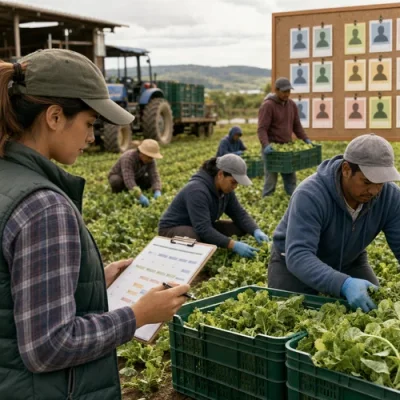
Backpacker Visa Reset Puts Labour Assumptions Back on the Farm Budget

The revised working holiday rules ease some pressure, but uncertainty remains for growers relying on seasonal staff

Backpacker Visa Reset Puts Labour Assumptions Back on the Farm Budget?w=400

The information on this website is general in nature and does not take into account your objectives, financial situation, or needs. Consider seeking personal advice from a licensed adviser before acting on any information.

The federal government’s latest reset of working holiday visa settings has turned a migration policy debate into a practical finance issue for many farm businesses.
Changes announced on 17 November 2026 keep a larger pool of third-year working holiday places than previously proposed, but also introduce new requirements that could still affect labour availability, training costs and harvest timing across regional Australia.

Under the revised plan, affected working holiday-makers seeking a second-year visa will face a 120-day regional work requirement from 1 March 2027, up from the current 88 days. The government has also set 45,000 second-year visa places and 25,000 third-year places for 2026-27, with a registration and invitation process due to open on 1 December 2026. Transitional arrangements mean current working holiday-makers have until 28 February 2027 to complete specified work and lodge a valid application under the existing process.

For farms that depend on seasonal labour, the issue is not only how many workers are technically available. It is whether workers arrive in the right district, at the right time, with enough certainty for employers to plan rosters, accommodation, machinery use and packing schedules. Recent ABC Rural reporting pointed to mixed reactions from growers, with some welcoming the partial backdown and others warning that uncertainty has already affected recruitment decisions for harvest and horticulture seasons.

From a finance perspective, labour uncertainty can flow quickly into working capital needs. If staff are harder to secure, farms may face higher recruitment costs, more overtime, greater reliance on contractors, delays in getting produce off paddock or trees, and increased wastage risk in perishable crops. Those costs can be difficult to absorb when fuel, fertiliser, freight and interest expenses are already elevated for many producers.

The policy also highlights why farm budgets need room for operational shocks that are not strictly weather-related. A seasonal enterprise may have strong production prospects but still face weaker margins if labour costs rise or if harvest logistics reduce saleable output. For businesses reviewing borrowings, equipment purchases or overdraft use, it may be useful to test higher labour and contractor assumptions alongside price, yield and rate scenarios. General resources on cash flow planning and repayment timing can help frame those discussions in broad terms.

There are still unknowns. Worker behaviour may change once the new process is operating, and regional outcomes are likely to differ between broadacre, horticulture, livestock and mixed farming areas. The practical message for producers is to treat labour policy as a live input cost risk, not just a staffing matter. Clear budgets, documented assumptions and conservative timing buffers remain important while the sector waits to see whether the revised rules improve confidence on the ground.

Published:Thursday, 19th Nov 2026
Author: Paige Estritori

Please Note: We do not endorse any specific products or companies. Some content is sourced from third parties, including press releases, and may not be independently verified for accuracy or completeness.

Share this news item:

Rate this article

0 Comments

No comments yet. Be the first to share your thoughts.

Finance News

Cattle Levy Rise Gives Producers a New Cost to Plan For
26 Nov 2026: Paige Estritori
Grass-fed cattle producers have narrowly backed an increase in the national cattle transaction levy, turning an industry governance debate into a practical budgeting issue for livestock businesses. The vote, reported after Meat & Livestock Australia’s annual meeting in Townsville, approved lifting the levy from $5 to $6 per grass-fed animal sold, with the higher rate expected to begin from 1 July 2028 if linked transparency and reporting reforms are in place. - read more
Autonomous machinery survey puts cost hurdles back in view
26 Nov 2026: Paige Estritori
A fresh national survey of Australian grain growers is putting autonomous machinery back on the finance agenda, not because every farm is ready to buy driverless equipment, but because the gap between interest and affordable adoption is becoming harder to ignore. - read more
Electric Trailers Turn Fuel Savings Into a Capital Planning Question
26 Nov 2026: Paige Estritori
ABC Landline reporting on 14 November 2026 has highlighted a South Australian push to commercialise battery-powered trailers that could reduce diesel use in heavy transport without requiring operators to replace prime movers. For Australian farm businesses, the development is worth watching because freight, haulage and on-farm logistics are increasingly part of the same machinery and cash-flow conversation as tractors, headers, loaders and irrigation assets. - read more
Mortgage hardship help can change the refinance picture
26 Nov 2026: Paige Estritori
Fresh reporting on mortgage stress has put a practical but often misunderstood issue back in front of Australian homeowners: asking a lender for hardship assistance can be the right step when repayments become unmanageable, but it may also change the way a future refinance is viewed. With higher variable rates flowing through household budgets after the Reserve Bank’s November move, the distinction between short-term repayment relief and longer-term borrowing flexibility is becoming more important. - read more


Bike Loans Articles

Understanding Boat Financing: Loan Types, Rates, Fees and Repayment Structures
Boat finance is more than choosing a loan amount and interest rate. This guide explains secured and unsecured boat loans, fixed and variable rates, comparison rates, common fees, deposits, balloon payments and repayment structures so Australian borrowers can compare options more confidently before applying. - read more
Don't Let These Boat Loan Application Errors Sink Your Dreams
Australia, with its stunning coastline and vast waterways, presents a perfect backdrop for boating enthusiasts. For many, owning a boat signifies freedom and adventure. Imagine setting sail with friends, fishing at sunrise, or exploring secluded coves that are only accessible by water. It's a lifestyle dream worth pursuing. - read more
Your First Boat: What to Consider Before Making a Purchase
Welcome to the thrilling journey of buying your first boat! Owning a boat is a dream for many Australians, offering the promise of sunny adventures and endless horizons. - read more
PPSR, Clear Title and Security Interests When Financing a Used Boat
Before financing a used boat in Australia, buyers should understand PPSR searches, clear title, security interests, HIN checks and how existing finance can affect settlement. - read more


Boat Loan Repayment Calculator

Boat Loan Repayment Calculator

The Great Aussie Boat Buyer's Handbook: A Guide to Loans, Repayments and Ownership Costs

The Great Aussie Boat Buyer's Handbook: A Guide to Loans, Repayments and Ownership Costs

Stay informed with MoneyTips

Get practical financial information, news, guides and resources.


Knowledgebase
Mortgage:
A loan in which the borrower (the mortgagor) offers a property and land as security to the lender (the mortgagee) until the loan is repaid. Repayments of the loan are usually made on a monthly basis over a long period of time, typically 25 years.